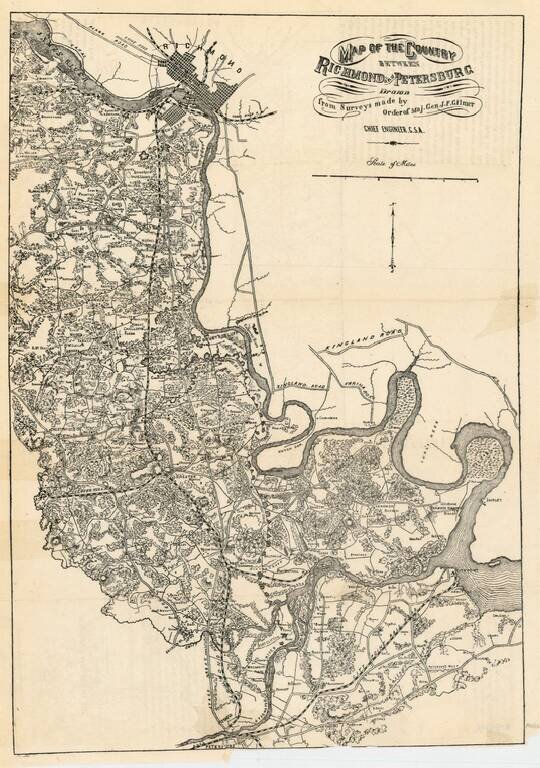
Rare Confederate States of America map of the region between Richmond and Petersburg, prepared by the Chief Engineer of the CSA, J.F. Gilmer. The map provides excellent detail, including town, roads, railroads, woods, rivers, forts, landowners and a...
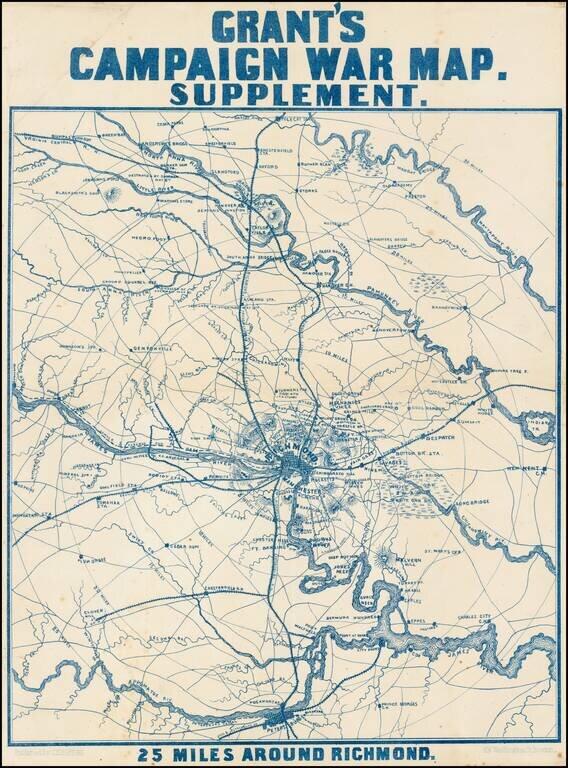
Scarce map of the area around Richmond, showing towns, railroad lines, roads, rivers, bridges, court houses, and other details. Notes show the US Arsenal, Sherman's Crossing of the South Anna and subsequent capture on May 11, and other details....
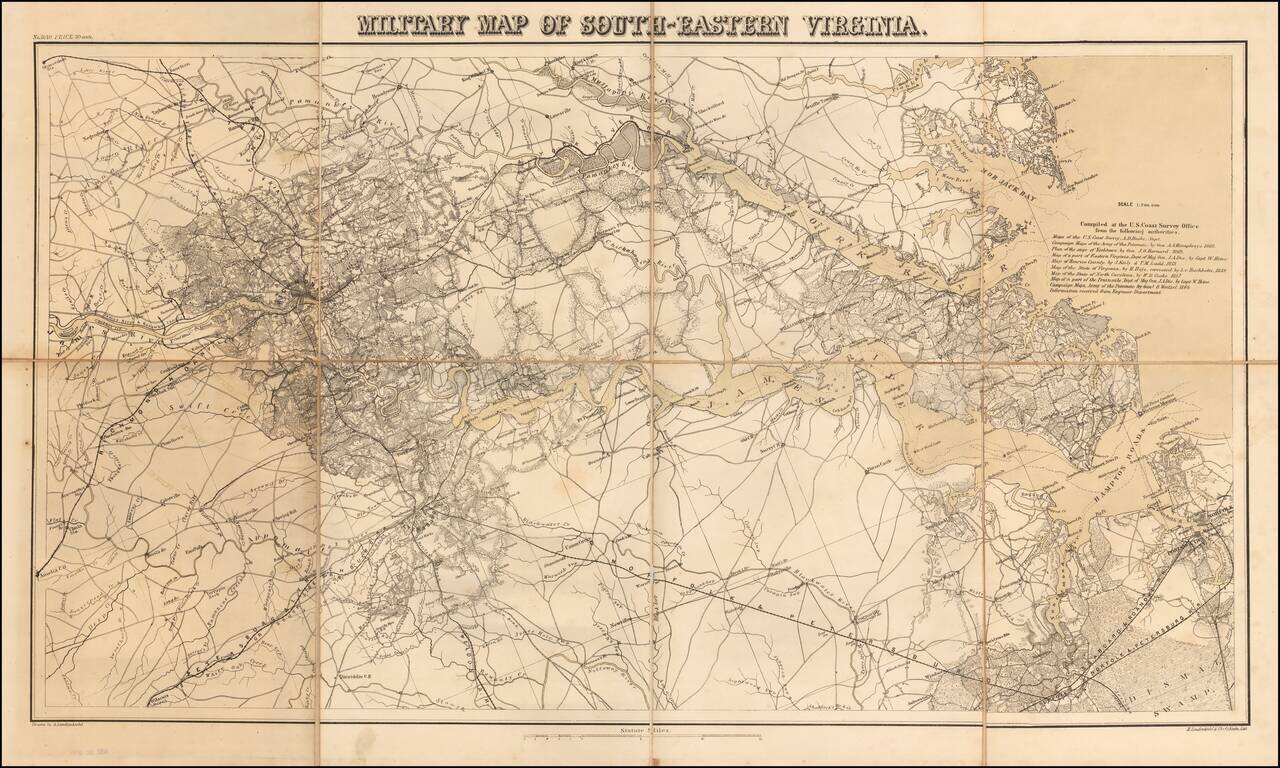
Rare separately issued map Southeastern Virginia, produced by Lindenkohl and lithographed by Krebs at the direction of the US War Department in 1864. The map depicts the towns, courthouses, lines of communication and other militarily significant...
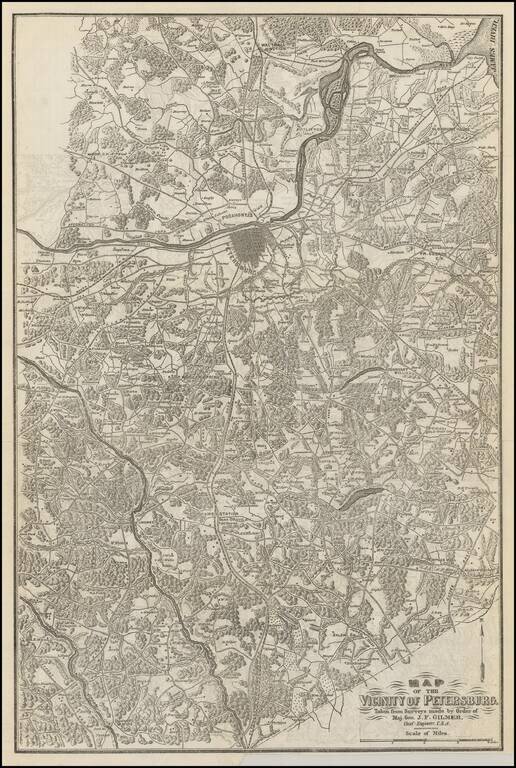
Scarce map of the vicinity of Petersburg, extending from the region just north of the James River to the state line with North Carolina. The map is exceptionally detailed and shows towns, court houses, roads, railroads, rives, woods and the names of...
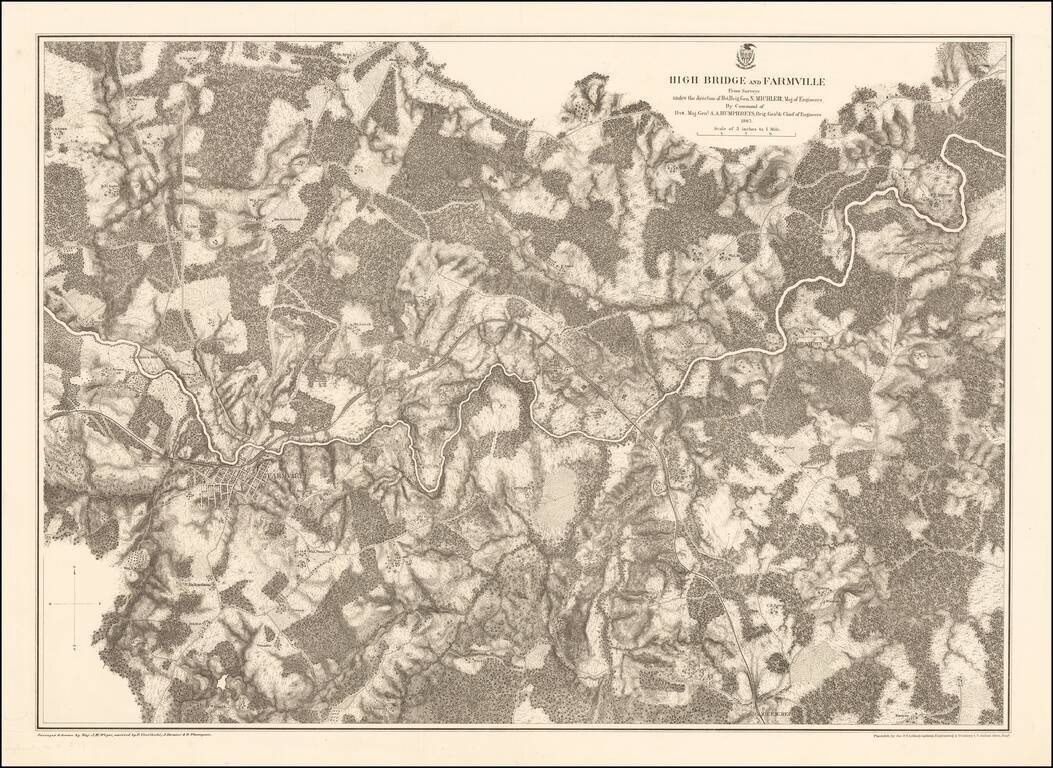
Highly detailed map of the area around Farmville, Virginia, depicting one of the final battle fields of the Civil War. Farmville Robert E. Lee retreated through Farmville as he escaped the Union Army in the Civil War. Farmville was the object of the...
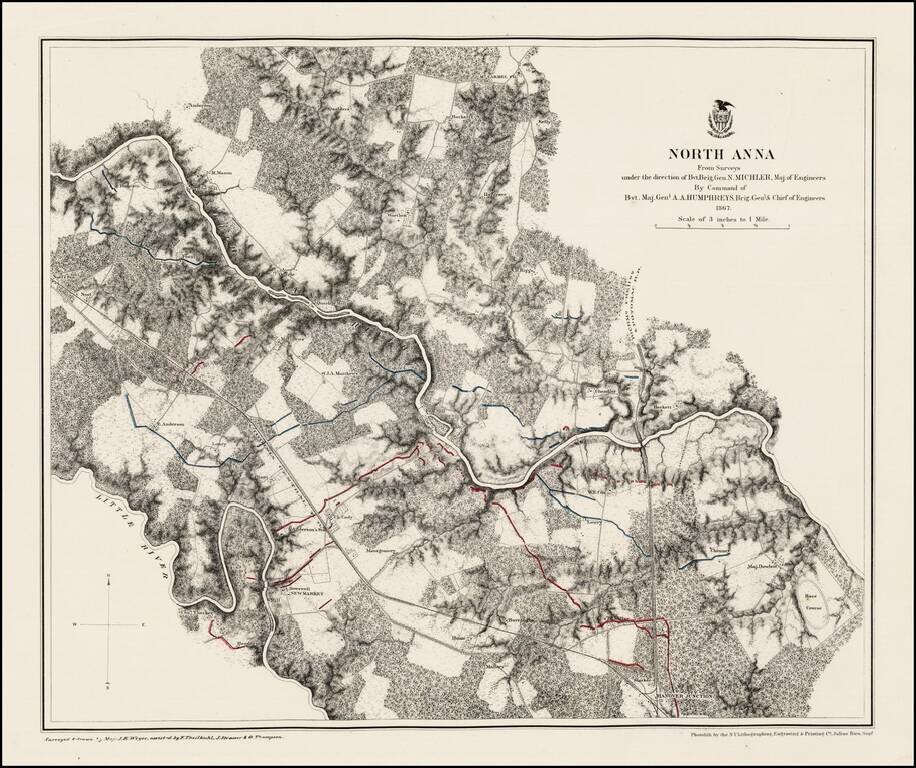
Fine example of this detailed map of area around North Anna. Rumsey describes the map as follows: Stephenson states these are a "detailed series of maps indicating fortifications, roads, railroads, houses, names of residents, fences, drainage,...
![[Atlanta Campaign] Map Illustrating the Military Operations in Front of Atlanta, Ga. From the Passage of Peach Tree Creek, July 19th 1864, to the Commencement of the Movement upon the Enemy's Lines of Communication, South of Atlanta, August 26th 1864 . .](/map/small/54700.jpg)
Remarkable map of the five miles around Atlanta, offered here in the so-called facsimile reproduction edition, published by the Graphic Company of New York. By far the most detailed map of the region around Atlanta to depict this fast growing southern...
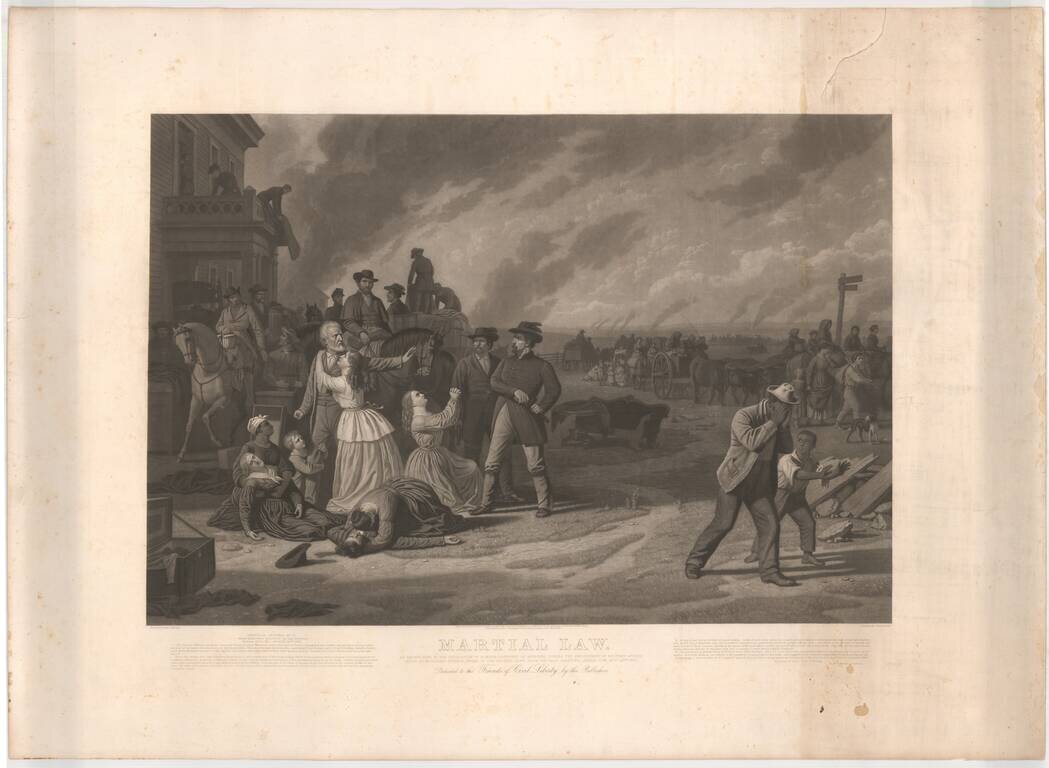
Proof state of this large mezzotint of George Caleb Bingham's painting "Martial Law," an artistic protest against the Federal Goverment's declaration of martial law on the Kansas-Missouri border. This iconic image shows the evacuation of civilians...
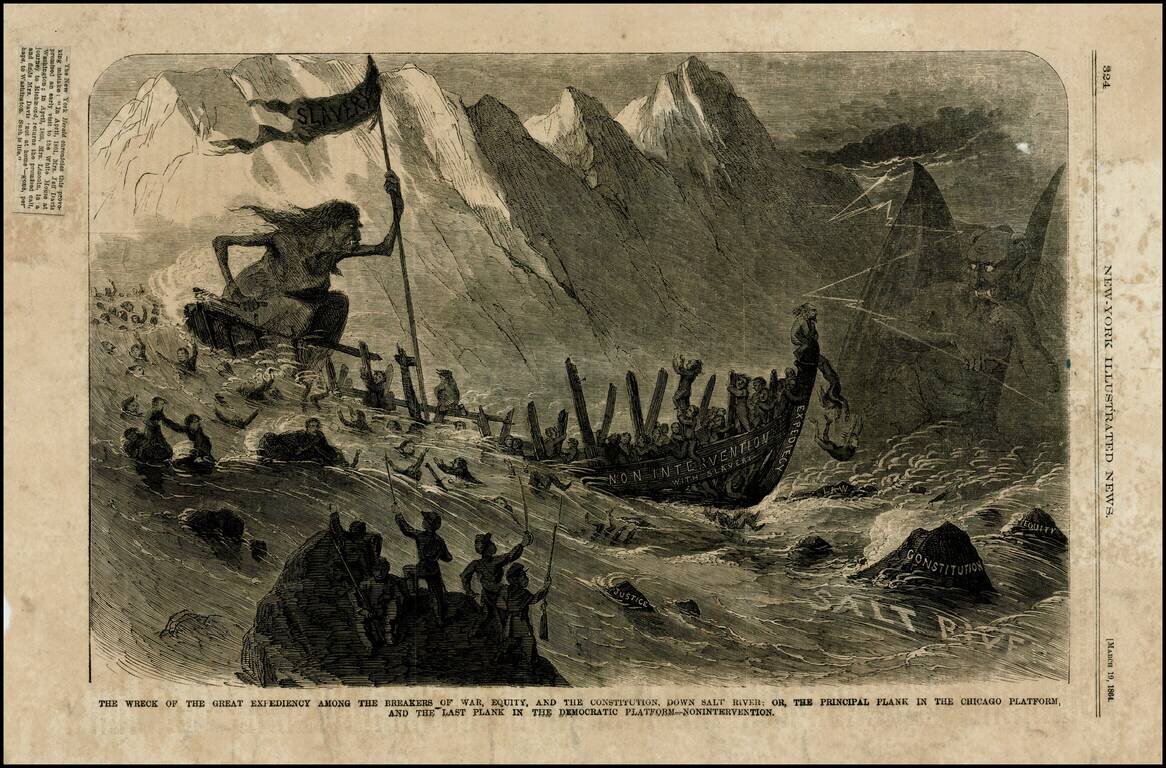
Wood engraved political satire, critiquing the Democratic Party's attitude towards slavery in 1864, the so-called nonintervention policy, which held that the Union should not interfere with slaves, particularly those who found their way to Union Army...
